

Conservation Biology Class Field Day
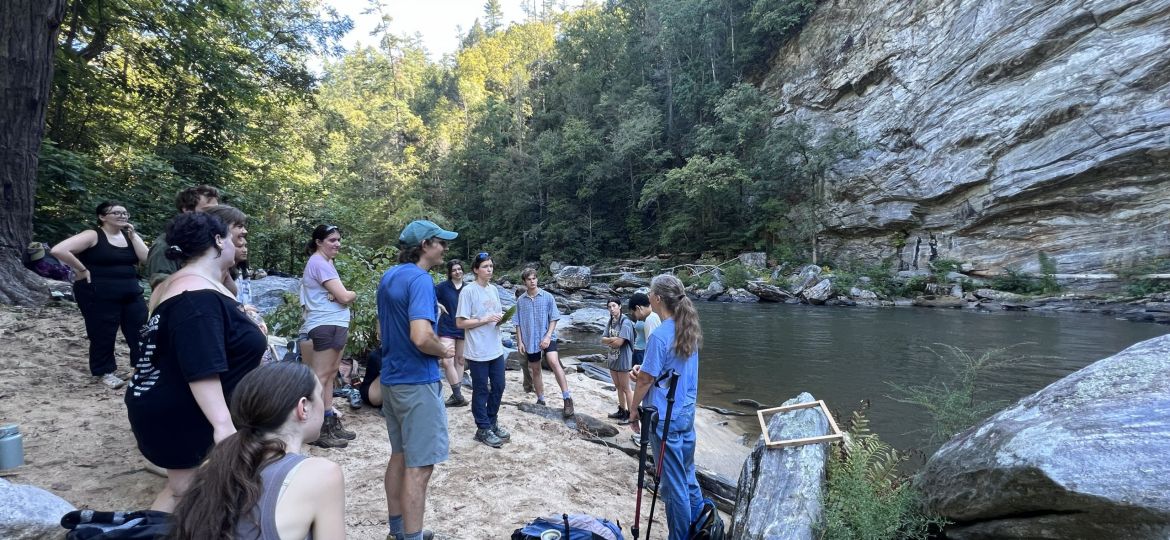
Image header: HBS Associate Director Jason Love and Chattooga Conservancy Executive Director Nicole Hayler speak to UNC-CH students beside the Chattooga River, on a microplastics sampling field visit to Raven’s Rock. Credit: Chattooga Conservancy
Microplastics Field Visit
On September 14th, Chattooga Conservancy staff had the opportunity to accompany Jason Love, Associate Director of the Highlands Biological Station, and his students to Raven’s Rock on Section IV of the Chattooga, where they collected samples for ongoing research on microplastic pollution in the Southern Appalachians. This research is being conducted by Love and his colleague Dr. Rada Petric, Director of the Highlands IE program with UNC Chapel Hill.
The trip was a part of the Highlands Field Site, a program offered by UNC Chapel Hill that gets undergraduate students out into the field for real, hands-on research with Highlands Biological Station staff. Their research—which focuses on sampling for microplastics in Appalachian watersheds by harvesting and testing invasive Asian Clams (Corbicula fluminea)—is a clear favorite among the students, who spent the day snorkeling for clams and swimming below Raven’s Rock.
Over a picnic lunch, Chattooga Conservancy Executive Director Nicole Hayler gave a talk on the natural and conservation history of the Chattooga River watershed and our organization’s work to protect it.
The students harvested more than ten clams, which were kept on ice to be brought back to the lab, where their contents will be dissolved, plated, and examined through a dissecting microscope for ultra-tiny plastic fibers, the most common form of microplastics in our rivers.
That’s because, unlike microplastic beads, shards, and “nurdles,” fibers tend to have a certain loft to them—they can be easily swept up into the atmosphere, where they get pushed around by storm systems and ultimately deposited into rivers and streams via rainfall. That means even the wildest and most pristine areas—areas like the National Wild & Scenic Chattooga River—can still be impacted by microplastic pollution.
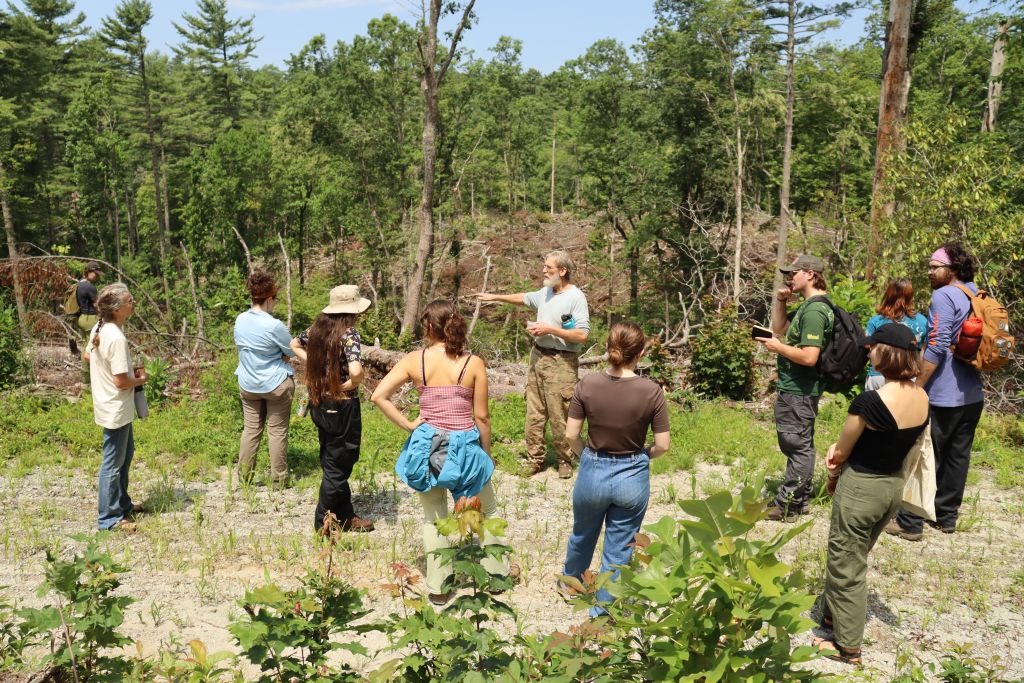
Discussing timber harvest impacts from the Southside Project observed in the Slick Rock area (Nantahala National Forest) with the Conservation Biology Class. Credit: Jasmine Williams
Researchers like Jason Love, Dr. Petric, and the Highlands Field Site students are key to understanding the vastly complex challenges of human impacts on the earth, and we’re always happy to collaborate in the important work of the scientists and staff of the Highlands Biological Station. Chattooga Conservancy wishes the students a rigorous and rewarding rest of the semester at the Highlands Field Site!