

The deadline is approaching for public comments on the proposal to repeal the Roadless Rule! Comments are due by Tuesday, October 6, 2026.
If you have been following Chattooga Conservancy’s social media or previous issues of Chattooga Currents, you are probably familiar with the popular Roadless Rule, and the impending threat to repeal it. For those new to the issue, or in case you need a refresher, here’s what’s at stake, and what you can do:
The Roadless Rule is a U.S. Forest Service regulation established in 2001 that prohibits road construction, industrial development, and logging in Inventoried Roadless Areas of national forests, while still allowing forest management measures to control or suppress wildfires, insect infestations, tree diseases, and certain human health risks. Initially, the rule covered about 58.5 million acres of national forests across the United States, but it currently applies to about 45 million acres following various state-specific exemptions. Roadless Areas account for 30% of our National Forest System lands.
Now, the U.S. Forest Service is proposing to repeal the Roadless Rule, stripping Roadless protections from 45 million acres of national forest and grassland across the United States.
The Appalachian Mountains hold the vast majority of Inventoried Roadless Areas in the Eastern United States.
There are almost 18,000 acres of Inventoried Roadless Areas within or immediately surrounding the Chattooga River watershed. About 11% of the public land within our watershed is protected by the Roadless Rule.
As you’ve traveled through some of these special places in and around the Chattooga River watershed, such as Rabun Bald, Overflow Creek, Sarah’s Creek, or the Foothills Trail, you may not have known you were in an Inventoried Roadless Area. But you likely experienced the benefits of that protection: intact forest landscapes and a remote quality that is otherwise rare in the Southeast.
There is no better testament to the importance of wild places than the sense of quiet solitude and wonder that these Roadless Areas hold. But they offer so much more than that. Roadless Areas contain many upper Chattooga tributaries, and even buffer a portion of the Chattooga River, helping ensure access to clean, crystal-clear water for tens of thousands of recreationalists every year, from trout fishermen to whitewater rafters.
And they are essential for wildlife: many of our watershed’s most threatened species, including the Northern Long-eared Bat, the Small Whorled Pogonia, and the Smooth Coneflower, call Roadless Areas home. Roadless Areas provide the stretches of uninterrupted habitat which are essential to dynamic and thriving ecosystems.
If we lose our Roadless Areas, we will lose the Chattooga River watershed as we know it.
The Roadless Rule is overwhelmingly popular. When the U.S. Forest Service adopted the Roadless Rule in 2001, more than 1.6 million people commented during the rulemaking process, with 95% supporting strong roadless area protection. At the time, this was the most extensive public participation in the history of federal rule-making. In 2025, when the Administration first published its Notice of Intent to rescind the Roadless Rule, roughly 600,000 comments were made during the initial, 21-day comment period, and over 99% of the public comments opposed rescission.
Now, we have what may be the most important opportunity to speak up for these special places. The public comment period for the rescission of the Roadless Rule is OPEN until October 6th, 2026.
To speak up for the Roadless Rule and all that it protects, you can leave a public comment directly on Regulations.gov HERE. If you would like guidance in writing your comment, a compilation of information about the Roadless Rule and a sample comment are available on our website HERE.
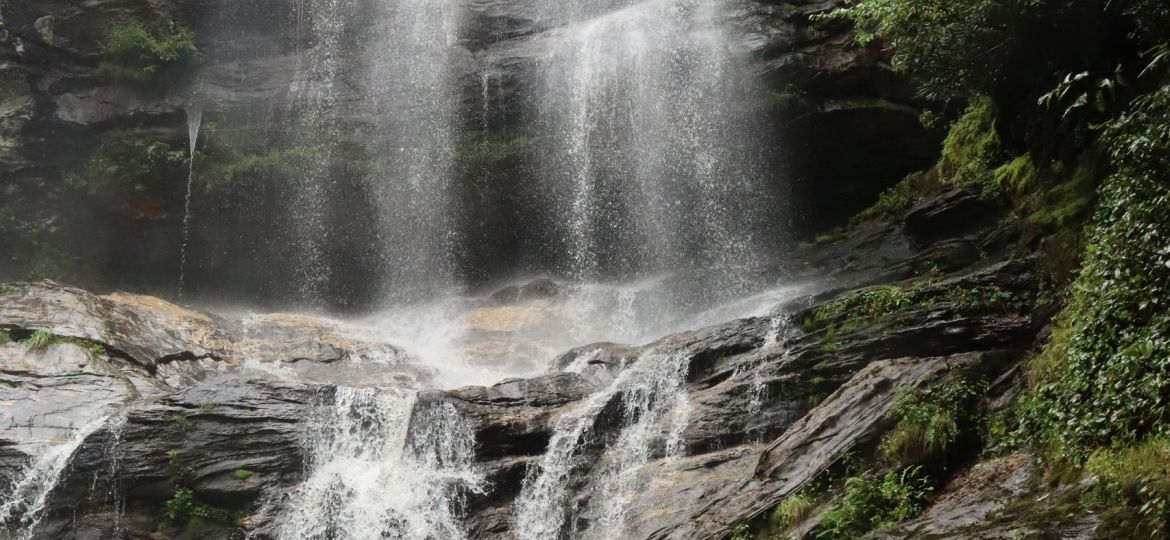
Header image: Glen Falls in the Overflow Roadless Area. Credit: Jasmine Williams