

The Roadless Rule
The Roadless Rule is overwhelmingly popular. When the U.S. Forest Service adopted the Roadless Rule in 2001, more than 1.6 million people commented during the rulemaking process, with 95% supporting strong roadless area protection. At the time, this was the most extensive public participation in the history of federal rulemaking. In 2025, when the Admiration first published its Notice of Intent to rescind the Roadless Rule, roughly 600,000 comments were made during the initial, 21-day comment period, and more than 99.8% of the public comments opposed rescission.
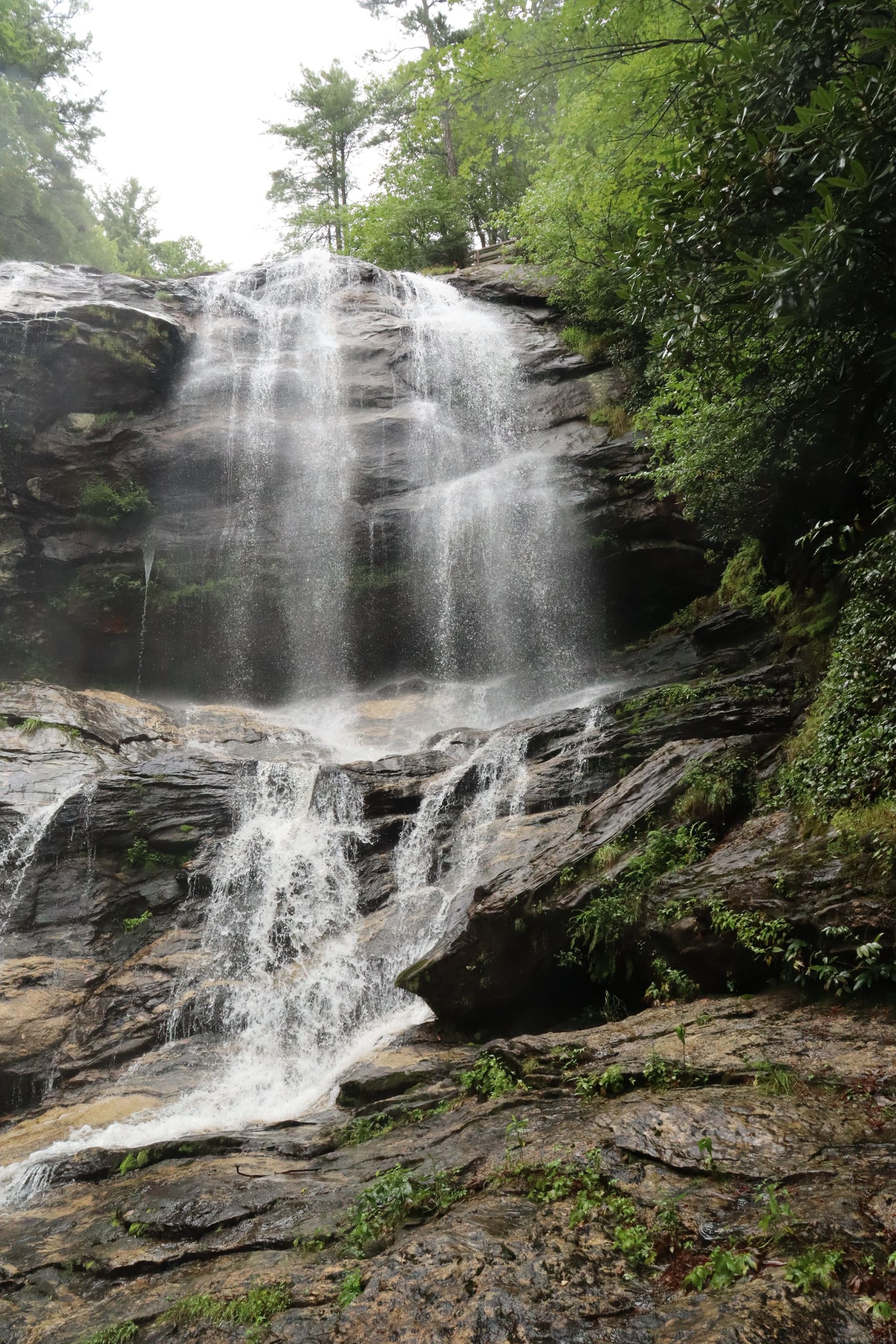
Overflow Creek Roadless Area, Chattooga watershed.
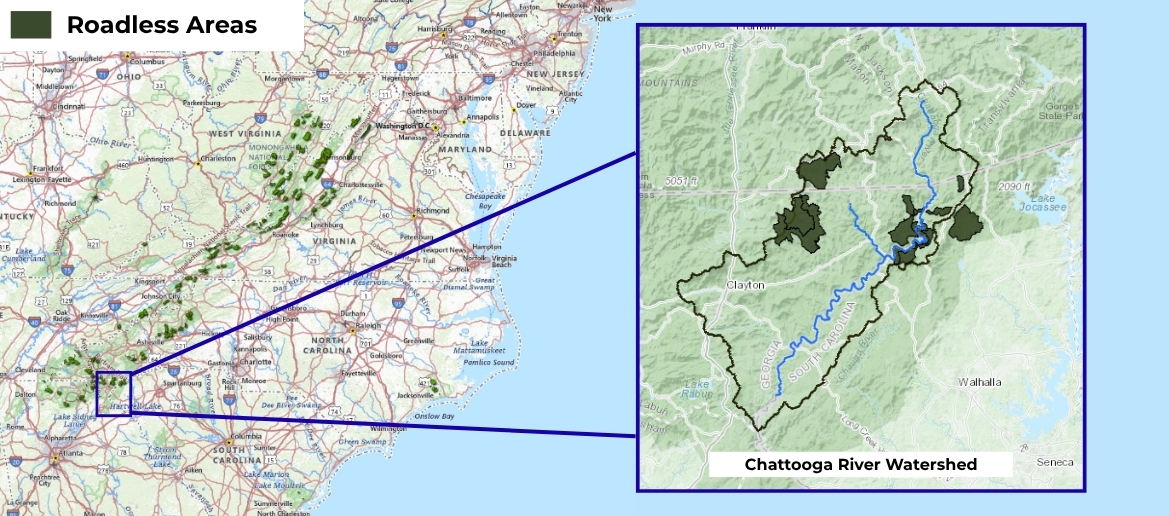
Base map from Outdoor Alliance; Watershed map from our Interactive Map
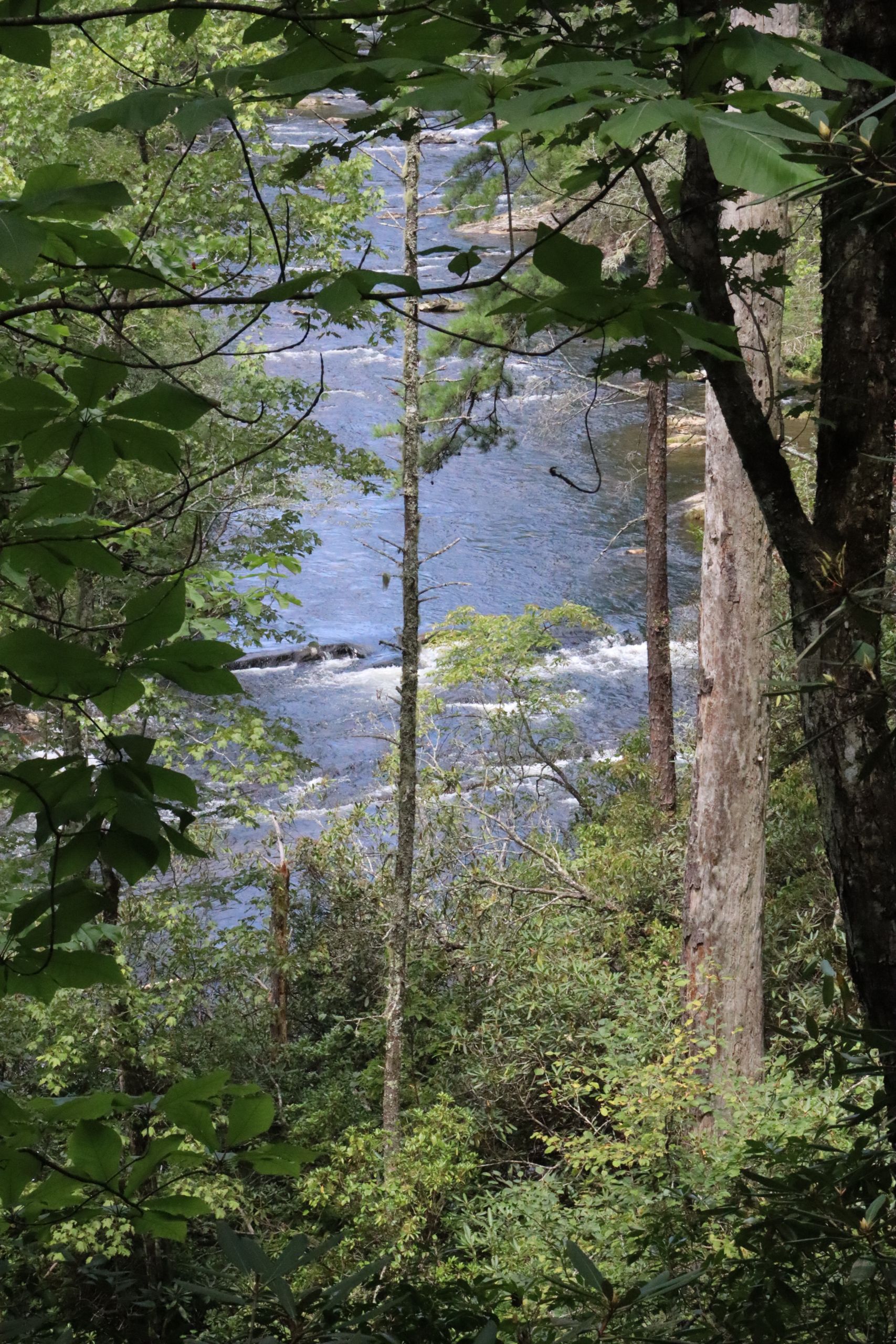
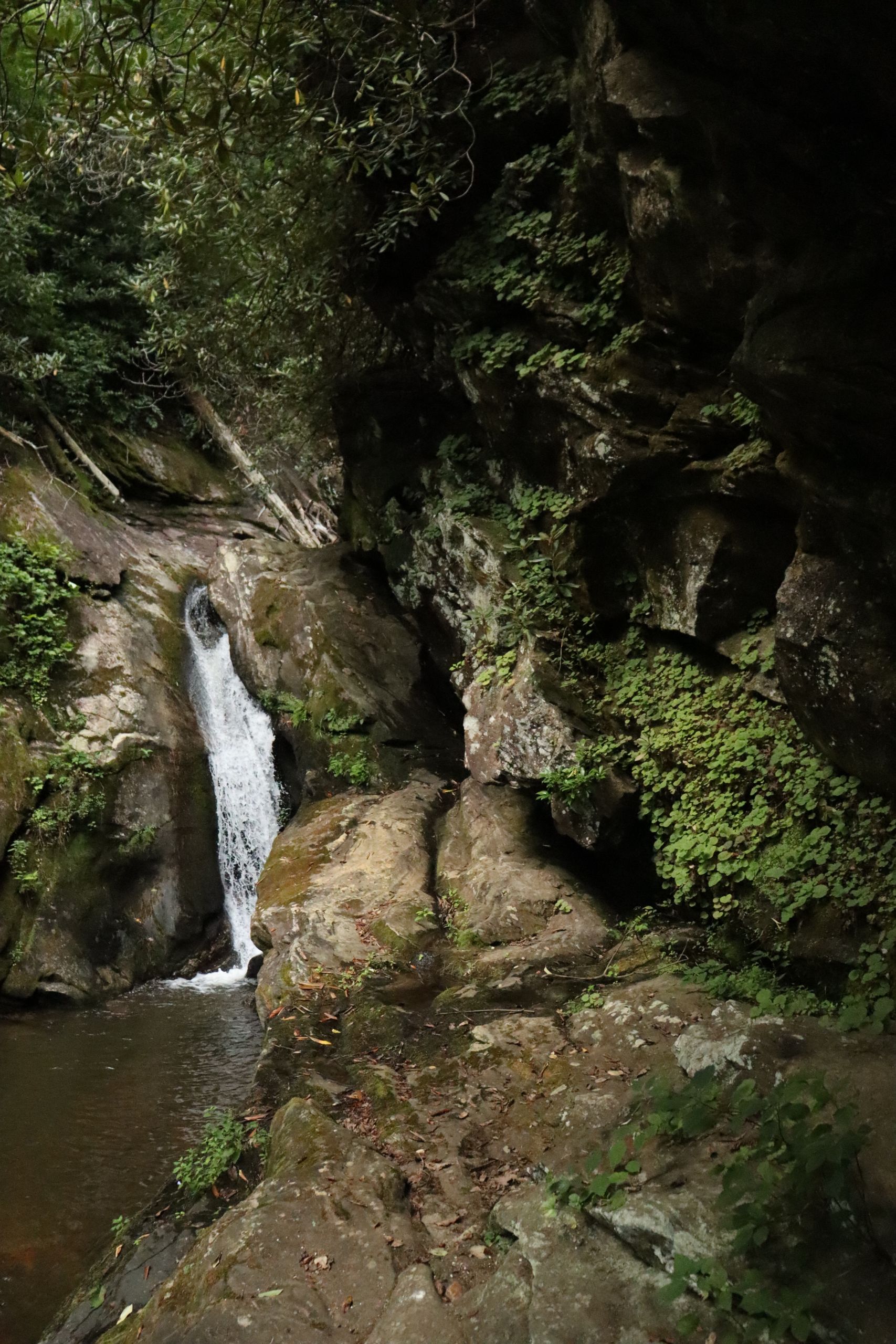
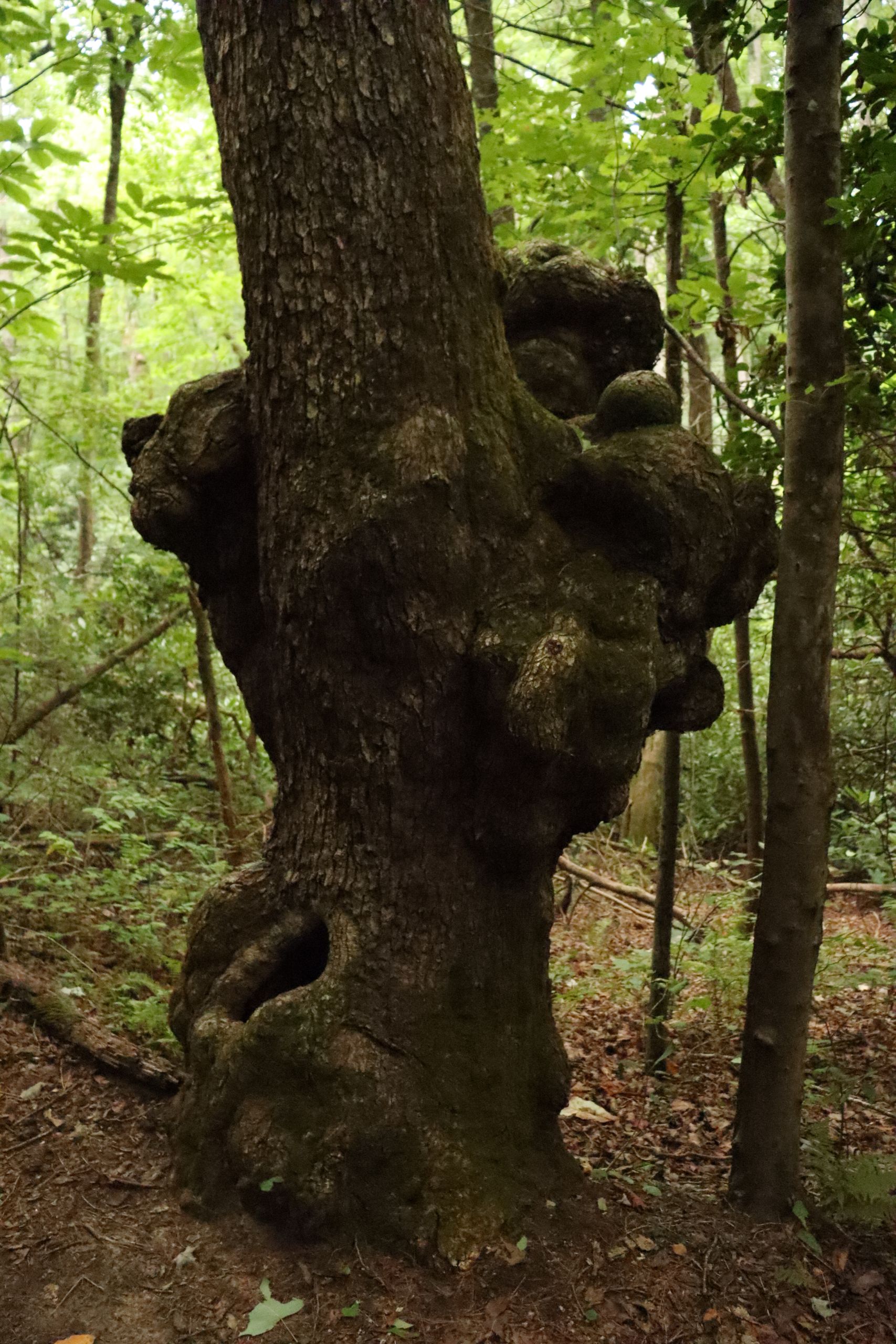
Left to right: View of the Chattooga from the Foothills Trail, Big Mtn. Roadless Area; Waterfall along Sarah’s Creek, Sarah’s Creek Roadless Area; Unique tree, Bee Cove Roadless Area

Salamander in Bee Creek, Bee Cove Roadless Area
And they are essential for wildlife: many of our watershed’s most threatened species, including the Northern Long-eared Bat, the Small Whorled Pogonia, and the Smooth Coneflower, call Roadless Areas home. Roadless areas provide the stretches of uninterrupted habitat which are essential to dynamic and thriving ecosystems.
If we lose our Roadless Areas, we will lose the Chattooga River watershed as we know it.
Option 1) Use our saMple Comment:
Copy the text below, open the comment portal, then paste it into the comment field.
To Whom It May Concern,
I strongly oppose the U.S. Department of Agriculture’s proposal to rescind the 2001 Roadless Area Conservation Rule.
Since 2001, Roadless Areas have effectively preserved many of the most important characteristics of our public lands, such as clean water, intact mature and old-growth forests, wildlife, and recreational opportunities that simply don’t exist anywhere else. In the Southern Appalachian Mountains, the values protected by Inventoried Roadless Areas are especially rare. Opening up Roadless Areas to logging and roadbuilding would destroy the most significant vestiges of natural landscape remaining in the Southern Appalachians, in a way that can’t be undone for generations—if ever.
As someone who cares deeply about the ecological integrity of the Chattooga River watershed in the Southern Appalachian Mountains, I know that Roadless Area protection is vital to the watershed I love. Roadless Areas buffer the National Wild & Scenic Chattooga River corridor, ensuring access to clean, crystal-clear water for tens of thousands of recreationalists every year, from trout fishermen to whitewater rafters. They provide undisturbed habitats essential for threatened, endangered, and sensitive species; as well as state species of greatest concern, migratory birds, and wildlife valued by hunters and anglers. Those seeking solitude or access to untouched natural landscapes can find these qualities in Roadless Areas in and around the Chattooga River watershed. These values are often not accessible on local public land outside of Roadless Area protection, and they would be irrevocably damaged by roadbuilding and logging if the Roadless Rule were stripped away.
Roadless Areas also protect against wildfire ignition risk, at a time when wildfire severity is rising nationwide. In fact, over the past three decades, wildfires were nearly 4X more likely to start within 50m of a road than in Inventoried Roadless Areas. Current Roadless Rule protections not only address the threat of wildfire ignition, but they also already allow flexibility for forest management activities and roadbuilding when necessary to fight fires.
The Roadless Rule serves the interests of local communities and visitors who benefit from Inventoried Roadless Area values. This is apparent in the 99.8% of comments which opposed this proposed action at the Notice of Intent stage. Repealing the Roadless Rule would not “provide benefits to the American people” as the Department claims, but would, instead, refute the will of the public, who overwhelmingly support keeping the Roadless Rule in place. There is therefore no need to repeal the popular and effective Roadless Rule. It is working.
I urge you to keep the 2001 Roadless Rule intact.
Thank you.
Option 2) Build your own Comment:
Use the information below to write a comment of your own!
Recreation:
Rare and endangered species:
Water Quality:
Chattooga watershed: Both the Chattooga River and many of the Chattooga River’s most integral tributaries flow through Roadless Areas. The areas provide a natural buffer between human development and our waterways, and are therefore essential to maintaining the water quality of the Chattooga. Between Burrell’s Ford and the West fork, the Big Mountain Roadless Area provides almost 2,000 acres of buffer on the Georgia side of the Chattooga River, and over 1,000 acres of buffer on the South Carolina side. Further, roadless areas provide this same protective buffer for many of the Chattooga’s tributaries: the headwaters of Overflow Creek, Sarah’s Creek, Holcomb Creek, Walnut Fork, Reed Creek, Pigpen Branch, King Creek, and Ira Branch all flow through Roadless Areas.
Economy:
Chattooga watershed: Roadless Areas in and around the Chattooga River watershed provide significant benefits felt by many local businesses and workers, especially in tourism industries. The anticipated loss to these services, if Roadless protections are eliminated, is difficult to estimate.
The strong support for Roadless Rule protections by such recreational interest organizations as Trout Unlimited and American Whitewater show that some of the most popular pursuits that draw visitors to the Chattooga River watershed will be at risk if the Roadless Rule is dismantled. The economic effects of decreased tourism could likewise ripple out into related industries, and the effects would be profound.
Other Talking Points:
-
The Roadless Rule is still incredibly popular. 99.8% of comments submitted at the Notice of Intent stage for this proposed action oppose repealing the Roadless Rule. It is USDA’s duty to listen to the overwhelming opinion of the public and leave the Roadless Rule in place.
-
Roadbuilding increases wildfire ignition risk, at a time when wildfire severity is increasing nationwide. In fact, over the past three decades, wildfires were nearly 4X more likely to start within 50m of a road than in Inventoried Roadless Areas. And the current Roadless Rule protections already allow for forest management activities and roadbuilding when necessary to fight fires.