
Summer heat lingers long, as midday temperatures maintain their sultry summits, but mornings begin to grow cooler. Swimming holes are still sought for rejuvenating afternoon dips, while an extra blanket is added to the foot of the bed in anticipation of brisk evenings. Birds travel south, feeding frantically to energize for their arduous journeys. Trees reveal their dramatic side, boldly proclaiming fall’s arrival through pigments of radical red and yellow. Acorns fall, bears fatten, and daylight fades; these are the signs that summer is relinquishing its residency in the mountains, and fall is beginning to unpack its bags. While it never stays as long as we would like, its visit is action packed and reinvigorating. As new colors permeate the landscape and animals finalize their winter preparations, it can be hard to know where to direct your attention. No matter where you look, however, fall’s wildflowers are hard to ignore.
Goldenrod (Solidago spp.)
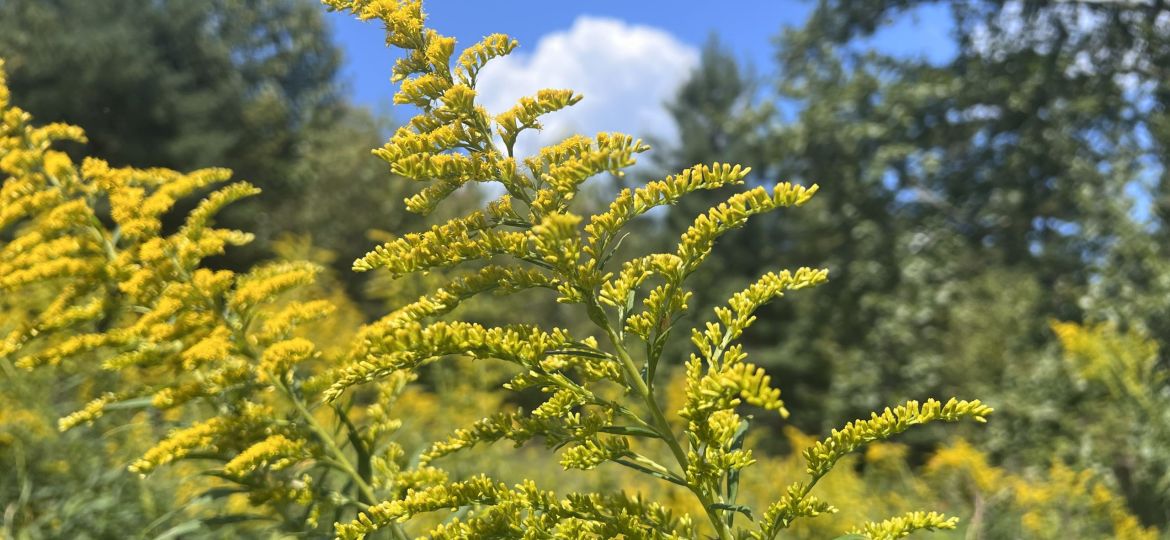
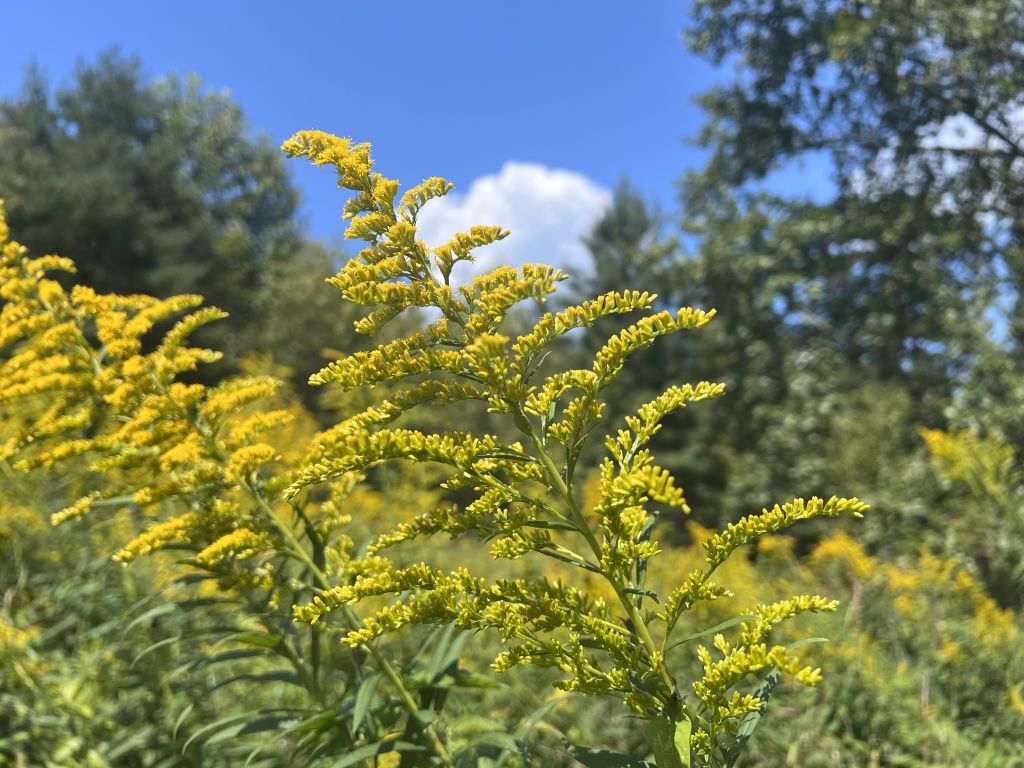
Widespread and vibrantly visible, Goldenrod is a fall classic. Blooming from late July through early November, this wildflower stands out in any unmowed pasture or disturbed section of streambank. Reaching between 4–8 feet in height, Goldenrod flowers a vigorous yellow. In 2003, South Carolina changed its state wildflower to Tall Goldenrod (Solidago altissima), and for good reason. In addition to its beauty, Goldenrod is a powerhouse wildlife plant. Across its range in the eastern United States, it is used by 104 caterpillar species as a food source and larva host.
Through the winter, songbirds eat seedpods from the standing dead stalks. As many as 42 species of bee rely specifically upon goldenrod as their pollen source. Goldenrod’s pollen is sticky and heavy, holding firm to the flower, so the plant depends upon insects for pollination instead of dispersion by wind. While Goldenrod is often blamed for causing seasonal allergies, it is actually ragweed pollen that is responsible for fall coughs and sneezes. Goldenrod’s genus name, Solidago, is derived from the Latin words “solidus” and “ago” put together, meaning “to make whole.” Goldenrod species have been used in traditional medicine worldwide for hundreds of years.
Ironweed (Vernonia spp.)
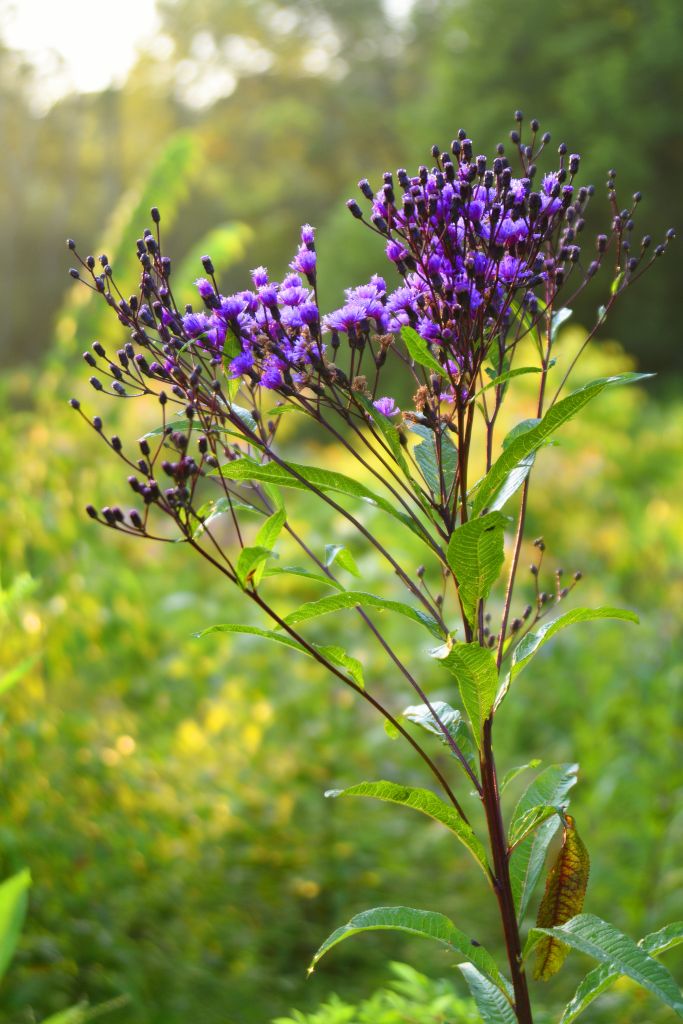
On most any rural backroad through pastureland resides a tall and sturdy wildflower known as Ironweed. Characterized by rich, deep purple flowers atop a tall stem, Ironweed ranges from 5–10 feet in height and can be found in low-lying seeps and creeks where sunlight is abundant. Its name comes from its solid stem and rust-colored seed pods. Like Goldenrod, Ironweed is a standout late-season pollinator. Its presence in the landscape is ensured due to bitter-tasting leaves and stems, which dissuade deer and cows from eating it. Several parts of the Ironweed plant can be used in natural dye processes. The flower yields a range of pink and purple tones, and the stem and leaves produce varying shades of green.
Cardinal Flower (Lobelia cardinalis)
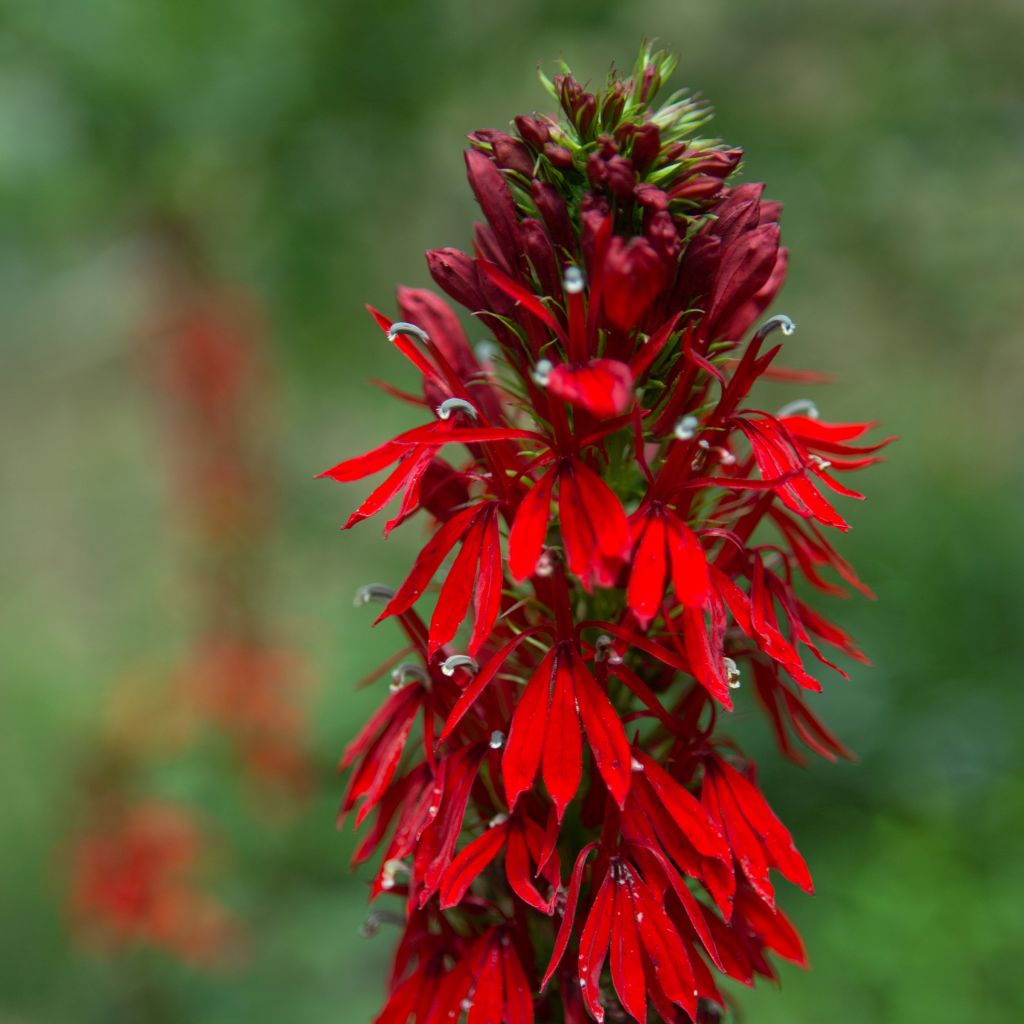
It’s hard to miss a Cardinal Flower. Growing in low-lying wetlands, this fall gem can grow up to 4–5 feet tall and undoubtedly sports the season’s most brilliant scarlet-red flower. It is most often seen near water, along pond and stream banks, as well as in wetlands and drainages. It has long, tube-shaped flowers that make accessing pollen difficult for insects. Therefore, the Cardinal Flower relies on hummingbirds for pollination. Cardinal Flower is a member of the Lobelia genus. Known for containing alkaloids, this plant is toxic if improperly consumed.